

Monster Mutation Invades Garden?!
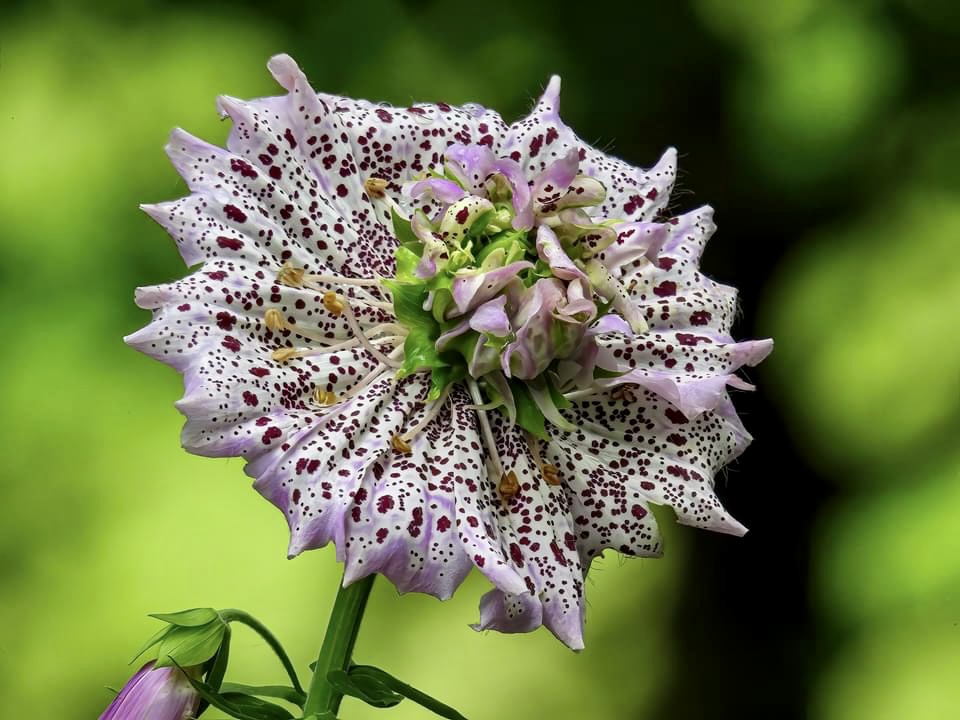
Okay maybe we’re being over-dramatic…but a mutated Foxglove has shocked and delighted The Gardening Team with some members having never seen this natural phenomenon!
Foxglove (digitalis pupera) is a garden favourite this time of year, recognisable for its towering, tubular petals in the summertime which can be seen below…

Whilst delivering a tour, Gardener Amy and Visitor Christine carefully spotted this spontaneous and sporadic mutation whilst in the Primula Wood of The Alnwick Garden.
Foxglove would usually have ‘Indeterminate inflorescences’ This means that the the plant will continually produce flowers until it no longer can or becomes tired. This is what gives Foxglove’s their signature height.
This is not the case when a mutation is present and instead, it becomes an example of ‘terminal peloria’ which stops the new growth of flowers and makes way for a unique and abormal ‘bell-flower’
Peloria’ being the Greek word for ‘Monster’ we think this mutation is a beautiful part of nature!

Discussed by botanists from the mid-nineteenth century onwards, this mutation is often referenced as Digitalis purpurea monstrosa. There has been a few studies to suggest when and why this happens but there is absolutely no predicting the eventuality of a mutation. It has been suggested that a common time for this to occur is Autumn, or perhaps when the ground the Foxglove has been uprooted or had plants removed.

Despite it’s uniqueness and rarity, it is absolutely something to keep an eye out on your next woodland walks!
Photo Credit: Christine Talbot


